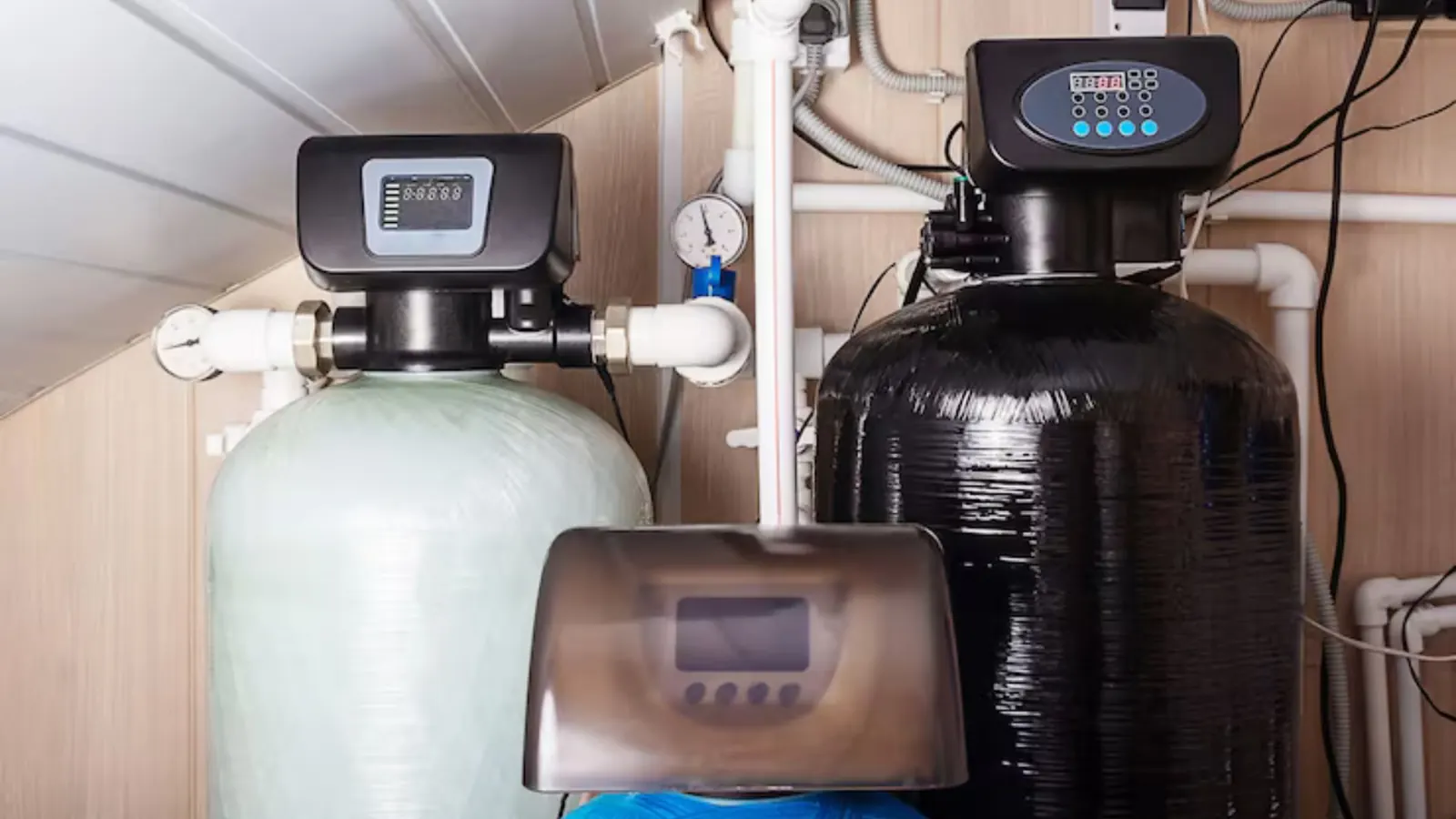
A leaking water softener can flood a basement quietly, because the unit connects to the water supply and a drain, and a failed line runs on its own. Common leak points are the bypass valve, the brine tank, the drain hose and the resin tank.
Chelsea has soft municipal water, so many homeowners wonder whether they need a softener at all. We cover both questions here.
Stop the water first
Put the softener into bypass mode or close the valves on the inlet and outlet. If the leak continues, close the main water valve. Unplug the unit and move stored items away from the floor.
Photograph the leak and call us if you cannot stop it. A leak at a pressurized fitting can release a lot of water in an hour.
Where softeners leak
| Leak point | Cause | Fix |
|---|---|---|
| Bypass valve | Worn O-rings or cracked body | Replace seals or valve |
| Drain line | Loose clamp or split hose | Replace hose |
| Brine tank overflow | Float or refill valve fault | Adjust or replace |
| Control head | Failed seals | Rebuild kit |
| Resin tank | Cracked tank or fitting | Replace tank or unit |
Do you need a softener in Chelsea?
Chelsea's water from the MWRA is already soft, at about one grain per gallon. Hardness at that level does not normally produce scale buildup, so most homes do not need a softener for the water itself.
People install them for other reasons, such as taste preferences or a legacy unit that came with the house. If yours is leaking and you do not need it, removal may be cheaper than repair.
Salt, drains and discharge rules
A softener flushes brine to a drain during regeneration. That drain must have an air gap or an approved connection so wastewater cannot siphon back. A split hose or an improper connection leaks when the unit regenerates.
We inspect the drain and discharge, repair the connection and make sure it runs to a proper standpipe or floor drain. For basement flooding concerns see basement waterproofing.
Repair, replace or remove
A leak at a seal or hose is cheap to fix. A cracked resin tank means replacement, and an old control head may not have parts available. Removal means installing a straight pipe in place of the bypass and capping or reconnecting lines.
We give you all three options with prices before work starts, and advise honestly about whether you need the unit. For plumbing changes see plumbing installation.
Chelsea local note
MWRA reports a hardness of about one grain per gallon and a pH of 9.0 to 9.5 for water delivered to Chelsea. If you want certainty about your own tap, test the water with a kit or ask your utility before buying treatment equipment.
Massachusetts requires plumbing work to be done and permitted by licensed plumbers. Source types: MWRA water quality information and state plumbing licensing guidance.
What to do with salt and brine spills
A leaking brine tank leaves a salty puddle that can stain concrete and corrode metal. Scoop dry salt into a bucket, mop the area with fresh water and dry it. Do not wash large amounts of brine into a floor drain that goes to a sump pump, because salt can damage the pump seals.
Check any metal shelves, pipes and appliances near the softener for rust, and wipe them down.
Cleaning up a flooded utility area
Move boxes and stored items to dry shelves. Run a fan and, if the room is closed, a dehumidifier for a few days. Wet cardboard and drywall grow mold fast, and it is better to throw out soaked material than to dry it in place.
If standing water reached an outlet or the electrical panel, do not enter the room until the power is shut off by someone qualified.
If you rent or share a building
A softener in a shared basement belongs to the owner or association. Report a leak right away and ask who is responsible for repair. Tenants should photograph any damage to their belongings and keep the message to the landlord for later.
For the plumbing connections, we work with owners and managers and can send notes on what we found.
Choosing a replacement or a different treatment
If your old softener is beyond repair, test the water first. A simple test kit shows hardness, and your utility reports publish typical values. With Chelsea's soft supply, many households find they do not need a softener, only a basic filter for taste.
If you do want treatment, choose a unit sized to your actual usage and look at the salt and water it uses per cycle. A smaller, efficient model often does the job.
Softener leaking?
Call and we will stop the leak and tell you whether you need the unit.
Water softener questions
Yes. A leaking unit can run unnoticed and soak the floor and framing. Shut it off and call a plumber.
Many last more than a decade with care, but seals and valves wear out sooner.
Yes. A bypass or a straight pipe lets water flow normally.
Often it improves pressure, because the resin bed adds restriction.
Yes. Dispatch can give you timing when you call.
Related pages
Nearby service areas: East Boston, Winthrop. Related services: Plumbing Installation, Basement Waterproofing.
Standards and sources
Fixture, supply, drain and vent work follow the Uniform State Plumbing Code (248 CMR 10.00), which requires a permit and inspection. The code is published by the Commonwealth at 248 CMR 10.00, the Uniform State Plumbing Code.
Written by the Chelsea Express Plumbing team. Last updated 2026-11-16.