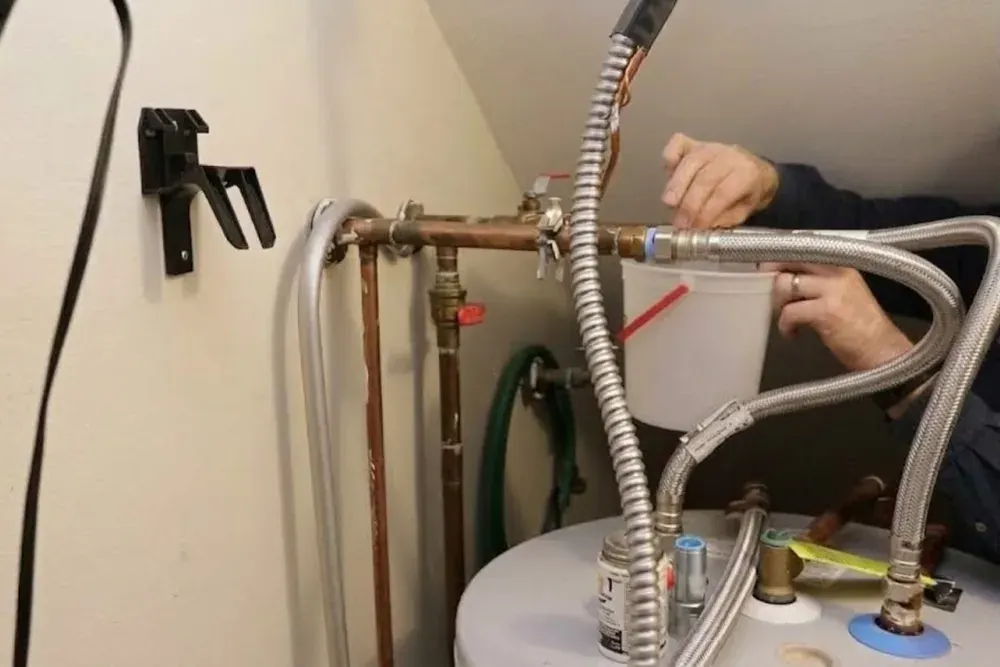
A pressure switch is a small safety part found on some gas and power-vent water heaters. It confirms that the exhaust fan is moving air before the burner lights. If the switch sticks, clogs or fails, the heater may refuse to fire, and you wake up to cold water.
This guide explains what the switch does, how to tell if it is the problem and why it is not a good DIY swap.
What the switch does
On a power-vent heater, a fan pushes exhaust out through a pipe. The pressure switch senses the airflow through a small tube. Only when it detects enough draw does it let the control board open the gas valve.
That chain protects the building from exhaust leaking into living space. It is why a failed switch stops the heater instead of letting it run unsafely.
Symptoms and what they point to
| Symptom | Cause | Fix |
|---|---|---|
| Fan runs, burner does not light | Switch not closing | Clean tube or replace switch |
| Error code about air or vent | Blocked vent or sensor tube | Clear the vent, check the tube |
| Intermittent hot water | Switch sticking or tube clogging | Service the sensor path |
| Heater clicks, then shuts off | Control board waiting for the switch | Test the circuit |
| Repeated lockouts | Vent or fan problem | Diagnose airflow |
Why the vent often matters more than the switch
A switch only reports what it senses. A blocked exhaust, a cracked vent pipe, a failed fan or a clogged condensate trap can all stop the switch from closing. Replacing the switch without checking those causes means the same fault returns.
Our plumbers check the vent, fan and tubing before they touch the switch, and if the heater is old we tell you whether repair still makes sense.
Why this is not a casual DIY repair
The switch is rated for a specific pressure. A wrong replacement may seem to work, but it leaves the safety system out of spec. Jumpering the switch to force the heater to run is dangerous and must never be done.
Gas appliance work should be done by a licensed plumber or gas fitter. If your heater is off and you smell gas, leave and call the gas utility or 911.
What the visit includes
We check for gas leaks, inspect the vent run and test the fan. Then we confirm the switch with a meter and replace it if it fails. After the repair, we fire the heater, check combustion and confirm the safety shutdown still works.
If the heater is leaking or the tank is corroded, replacement is a better choice, and our replacement page explains the process.
Chelsea local note
Many Chelsea buildings are older and have cramped basement mechanical rooms. Venting runs are often long or shared, which stresses the pressure switch circuit. Massachusetts requires gas appliance work to be done under the state gas code by licensed professionals.
MWRA delivers soft water to Chelsea, so scale is not the usual cause of vent trouble. Source types: state plumbing and gas licensing guidance and MWRA water quality information.
Reading the error code on the heater
Many power-vent heaters flash a code that points to the pressure switch or the vent. The code often shows a number of blinks or a letter on a small display. The label inside the cover or the manual explains each one.
Write the code down before you reset the unit. A plumber can tell a lot from the pattern, and resetting erases the recent history on some models.
Vent materials and routing
Power-vent systems use plastic pipe that must be sloped, sealed and supported. A sagging pipe holds condensate, which can block the sensor tube. A cracked fitting leaks exhaust into the room and starves the switch of draw.
In older Chelsea basements, a long vent run to an outside wall is common. We check slope, supports and the termination for snow and debris, especially after winter storms.
What to do if the heater is old
A heater with a failed pressure switch and a rusty base may be near the end of its life. Replacing the switch buys time but not reliability. We give you the repair price and the replacement price side by side so you can choose.
If you decide to replace, the installation page describes how we prepare for venting and permits.
How long the repair usually takes
A pressure switch repair is normally a short visit once the part is in hand. Most of the time goes to diagnosis, since the switch is one link in a chain of vent, fan, tube and control board. We bring common switches on the truck, but model-specific parts may need a second visit.
If a part must be ordered, we tell you the lead time and whether a safe temporary measure exists. We will not bypass the safety device to restore hot water.
Heater will not fire?
Call our 24/7 line. A plumber can test the switch and the vent.
Pressure switch questions
The tube and port can sometimes be cleared. The switch itself is a sealed part and is replaced if it fails the test.
No. Bypassing a safety device can let exhaust gases enter the home.
Look for a fan housing on the top or side and a plastic exhaust pipe instead of a metal flue.
No. This part belongs to gas and power-vent appliances.
Call dispatch. If there is no gas smell, we will tell you whether it can wait until morning.
Related pages
Nearby service areas: Everett, Malden. Related services: Water Heater Repair, Water Heater Replacement.
Standards and sources
Relief valves, discharge pipes and venting are covered by the Uniform State Plumbing Code (248 CMR 10.00) and by the manufacturer's installation instructions. Gas appliance work is regulated by the state Board of State Examiners of Plumbers and Gas Fitters. The code is published by the Commonwealth at 248 CMR 10.00, the Uniform State Plumbing Code.
Written by the Chelsea Express Plumbing team. Last updated 2026-11-16.