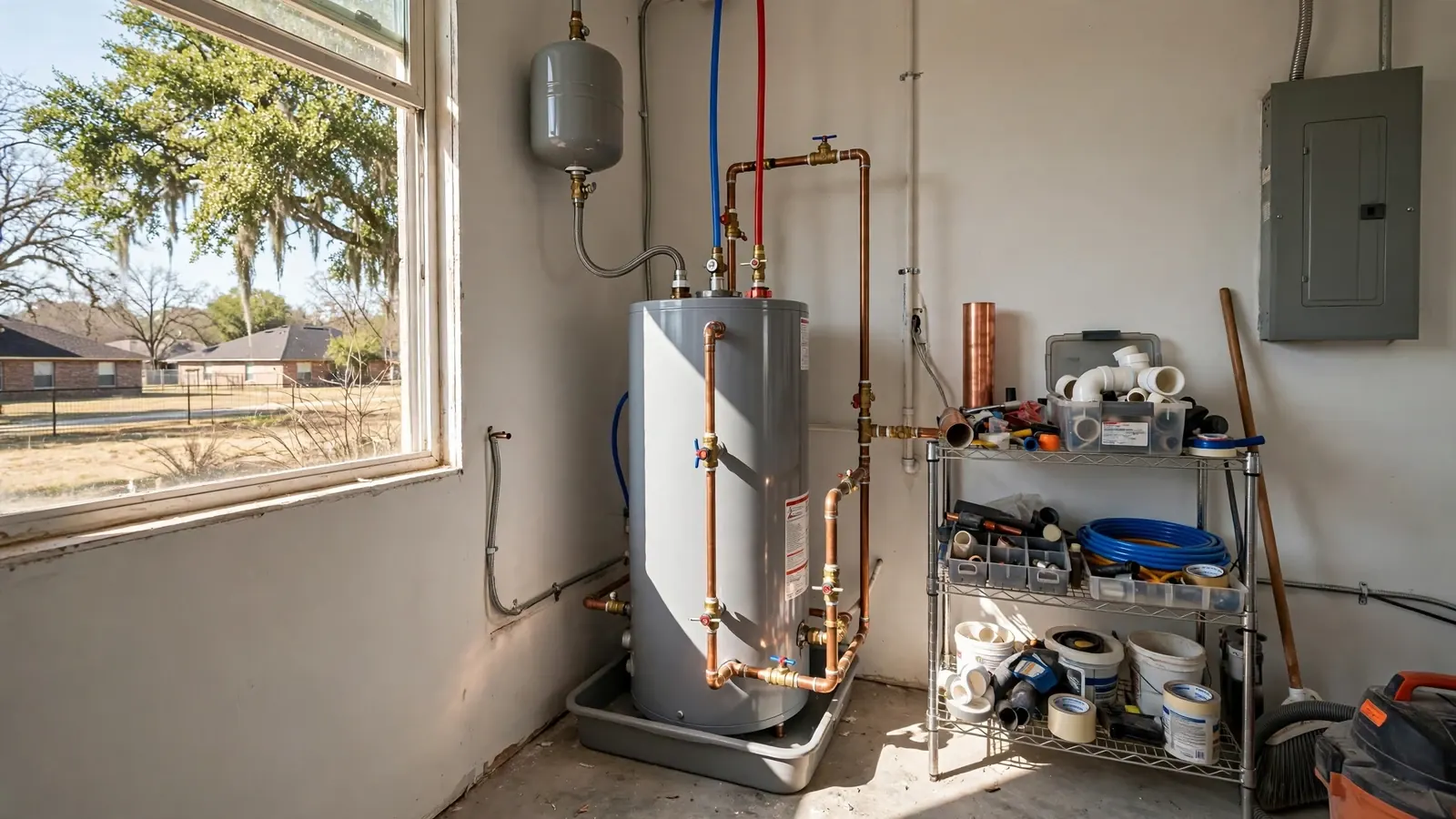
Water heater installation in Chelsea, MA is the planned placement of a new heater where there was none, or the upgrade of an existing unit before it fails. It differs from a rushed replacement because you can shop the options, schedule the work and prepare the space.
Planning early matters in older buildings. Tight basements, shared venting and gas line size are easier to solve when no one is standing in a cold shower.
Why plan an install instead of waiting for a failure
Heaters give some warnings before they fail, including rust-colored water, pooling at the base, rumbling and repeated tripped breakers. Replacing on your schedule means you choose the type, not whichever unit is on the truck.
A planned job also lets us check the electrical panel for a hybrid heat pump, or the gas meter and pipe size for a tankless unit, before ordering anything.
How a planned installation is prepared
- Walk the spaceWe look at the location, clearance, venting path and utility connections.
- Choose type and capacityYou pick tank, tankless or hybrid based on household use and the building.
- Order and permitA licensed plumber files the local permit, and parts are ordered for a scheduled day.
- Install, inspect and testWe connect water, gas or power, test, and arrange the inspection.
Installation requirements by unit type
| Unit type | Utilities needed | Venting |
|---|---|---|
| Standard gas tank | Gas line, cold supply | Flue or direct vent |
| Standard electric tank | Dedicated circuit, cold supply | None |
| Gas tankless | Larger gas line, power, cold supply | Dedicated stainless or plastic vent |
| Electric tankless | Large dedicated circuit | None |
| Hybrid heat pump | Dedicated circuit, condensate drain | Needs open air around the unit |
Local code and permits
Massachusetts treats replacing or relocating a water heater as permitted plumbing work. The permit is issued by the local plumbing inspector and only a licensed master or journeyman plumber can obtain it.
Chelsea's local plumbing and gas inspector reviews this work. Ask to see the permit after the work, and call the inspector if you have any doubts.
Fitting the old unit's space to a new one
New heaters are often a different size from the old ones. A modern efficient tank can be wider or taller, and a tankless needs a wall instead of a floor footprint.
We measure first and tell you if the closet needs adjusting. If water heater trouble is the reason for the project, read about repair options before you decide.
Safety features every installation should include
A temperature and pressure relief valve with a discharge pipe to a safe spot, a shutoff valve on the cold supply, a drain valve and seismic or tie-down hardware where required are all part of a proper install. Gas heaters add a sediment trap, a shutoff valve and a drip leg.
We check each before we leave and show you how to use the shutoffs. A homeowner who knows where they are can stop a leak in seconds.
Temperature settings and scald protection
Set the thermostat to a temperature that is hot enough for dishwashing and safe for skin. Households with young children or older adults often choose a lower setting or add a mixing valve at the heater.
We set the temperature at the end of the visit and explain how to adjust it. A mixing valve costs more but is worth it for homes with vulnerable occupants.
Ready to plan your install?
Call and we will schedule a visit to measure and quote.
What an installation quote depends on
What moves the price
Insurance does not cover a planned upgrade. Your quote is clear before work starts. Call (617) 752-0573.
Water heater installation questions
Yes. A licensed plumber on our team files the permit with the local plumbing inspector and arranges the inspection.
It depends on venting, gas supply and building rules. We check the shared stack and with the owner or association before quoting.
A standard tank takes a few hours. A conversion to tankless, new venting or new electrical work takes longer and is scheduled with you.
Yes. For a failed tank, see our emergency water heater replacement page.
Nothing. We drain, disconnect and haul the old heater away.
Standards and sources
Installation, relief valve and venting requirements come from the Uniform State Plumbing Code (248 CMR 10.00) and the manufacturer's installation standards for the unit you choose. The code is published by the Commonwealth at 248 CMR 10.00, the Uniform State Plumbing Code.
Written by the Chelsea Express Plumbing team. Last updated 2026-11-16.