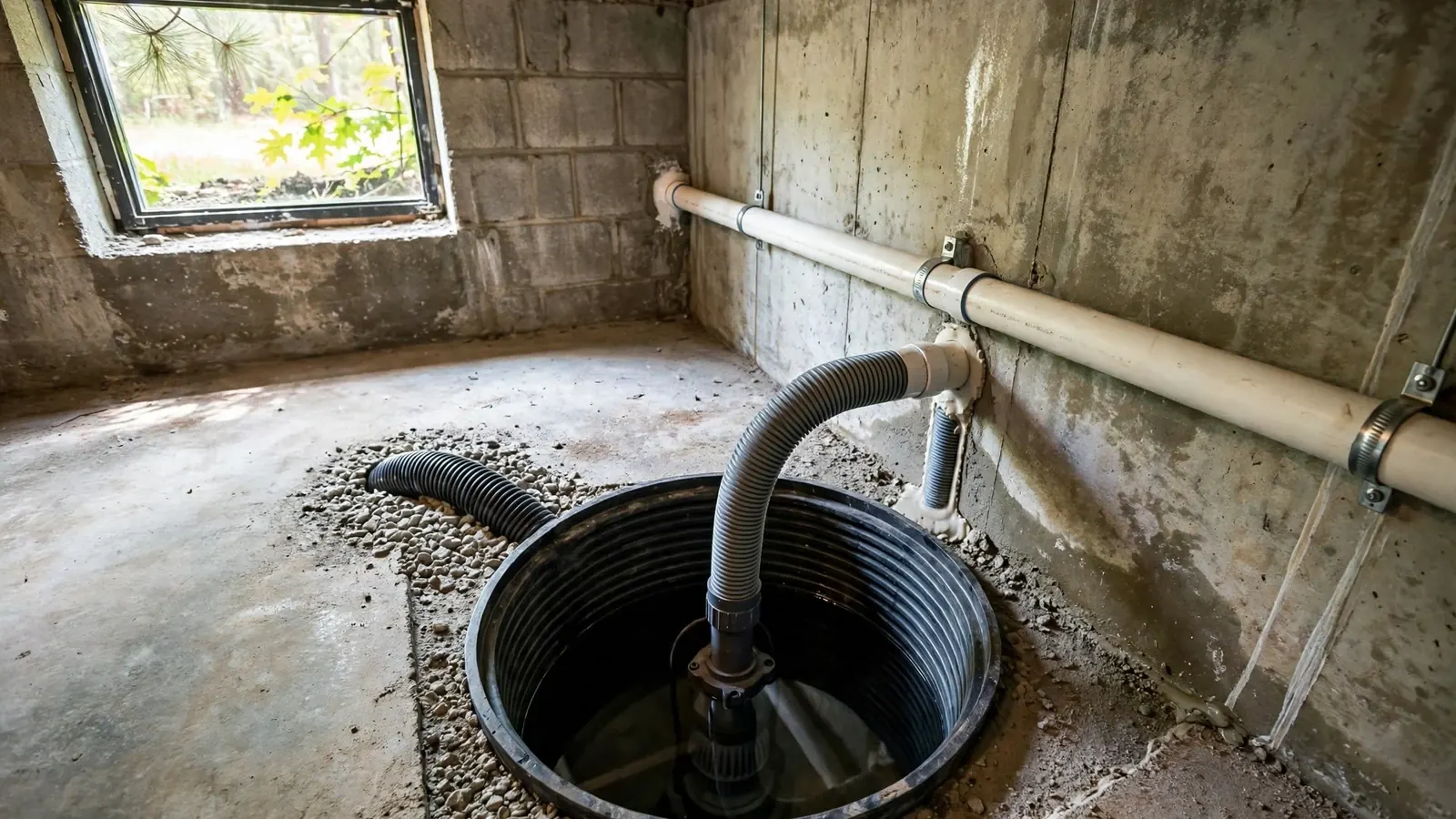
The pump gets the attention, but the discharge pipe is where many sump failures start. A cracked, frozen, disconnected or poorly placed pipe sends water right back to your foundation, or leaves the pump running without moving anything.
This guide covers what a good discharge looks like, the signs that yours is failing and how we repair it.
What a good discharge pipe does
The pipe carries water from the pump up and out of the building to a spot where it can drain away from the foundation. A check valve in the line stops water from flowing back into the pit when the pump stops.
The pipe should slope away from the house at the exit, stay free of kinks and have secure joints. It should not end against the wall, where water can run straight back to the basement.
Discharge pipe problems
| Sign | Likely problem | Fix |
|---|---|---|
| Pump runs often but pit refills | Water returning from a short or flat discharge | Extend and slope the pipe |
| No water leaving outside | Frozen or blocked pipe | Thaw, clear and insulate |
| Wet wall near the pipe | Cracked or disconnected joint | Repair or replace section |
| Pump hammers on shutoff | Failed check valve | Replace valve |
| Soggy ground at the exit | Discharge too close to the foundation | Extend the pipe farther |
Winter freezing in Chelsea
A discharge pipe that sits above ground in cold weather can freeze and block. Water then backs up into the pit and overflows. A freeze-resistant outlet or a pipe that drains by gravity reduces the risk.
Do not use heat tape without knowing the product rating. Our plumbers recommend solutions that fit your layout. See sump pump repair for the full service.
Where the water should go
Direct discharge to a yard, a drywell or an approved storm connection, depending on what the property allows. Check your lot and neighbors, and avoid sending water onto a sidewalk where it can freeze or onto a neighbor's property.
Many communities prohibit connecting a sump pump to a sanitary sewer line. Ask the city before you tie into any public system.
Repair, reroute or replace the line
A loose joint can be glued or clamped. A cracked line is replaced. A short or poorly placed line is extended or rerouted. Where the original route is blocked, a new path through the rim joist or foundation wall may be needed.
We also check the check valve and the pit. If the problem is bigger than the pump, see basement waterproofing.
Chelsea local note
Chelsea is low and close to tidal water, so groundwater rises after storms. About 70 percent of the city's sewer system is combined, so sending sump water into a sanitary connection is a bad idea. Ask the Water and Sewer Department or the plumbing inspector how discharge is allowed at your address.
Source types: city sewer information and local inspector guidance.
Checking your discharge pipe yourself
On a dry day, trace the pipe from the pump to the outlet. Look for cracks, loose clamps, kinks and low spots where water can sit. Check that the outlet is clear of leaves and ice, and that the ground around it slopes away from the house.
Pour a bucket of water into the pit and watch it leave the pipe outside. It tells you more than any theory.
Check valves, noise and water hammer
The check valve keeps the pipe from draining back into the pit. A failing valve lets water fall back, and the pump restarts again and again. A banging sound when the pump stops is a sign of a sticking valve or a pipe that is not secured.
We replace the valve with a quiet type and add a clamp or strap where the pipe vibrates against framing.
Pitfalls with long runs and neighbors
A discharge that ends near a property line can send water onto a neighbor's lot. That causes disputes and can lead to complaints to the city. Keep the water on your own property, and use a longer pipe if needed.
In tight Chelsea lots, a drywell or a connection approved by the city may be the only option. Ask before you build it.
Seasonal checks that prevent a midnight call
In fall, remove leaves and debris from the outlet and check that nothing blocks the pipe. In winter, look for ice at the outlet after a freeze. In spring, test the whole system with a bucket of water before the rain begins.
Write the dates in your calendar. A five-minute check three or four times a year costs nothing and often catches a failing pipe before the basement floods.
Pump runs but basement stays wet?
Call and we will check the discharge line.
Sump discharge questions
It might be recycling water from a short discharge line or a failed check valve.
Far enough that water does not run back along the foundation. A plumber can recommend a length for your lot.
Usually not. Floor drains often connect to the sewer, which is not allowed for sump water in many places. Ask first.
In cold areas, an exposed run benefits from protection or a design that drains.
Yes. Our 24/7 line serves both.
Related pages
Nearby service areas: Everett, Winthrop. Related services: Sump Pump Repair, Basement Waterproofing.
Standards and sources
Pump discharge piping falls under the Uniform State Plumbing Code (248 CMR 10.00). Where sump water may be discharged is set by the city. The code is published by the Commonwealth at 248 CMR 10.00, the Uniform State Plumbing Code.
Written by the Chelsea Express Plumbing team. Last updated 2026-11-16.