Bio cleaners, also called enzyme or bacterial drain cleaners, use living cultures or enzymes to break down organic buildup. They are sold as a gentle alternative to caustic chemicals and are popular with homeowners who worry about pipes and the environment.
They have a place, but they are not a fix for a hard clog. This guide explains what they do well, what they cannot do and how to decide when to call us.
What bio cleaners actually do
These products are meant for maintenance. The enzymes digest grease films, soap scum and food residues that coat pipe walls, and they can reduce slow drains and odors when used regularly.
They work slowly, often over hours or days, and they need time in a pipe with little flow. They are not designed to dissolve a solid blockage such as a hairball, a rag or a collapsed pipe.
Bio cleaner, chemical cleaner or plumber
| Problem | Bio cleaner | Chemical cleaner | Plumber |
|---|---|---|---|
| Slow drain with odor | Often helps | Risky for old pipes | If it persists |
| Grease film buildup | Helps with regular use | Can harden grease further | Hydro jetting |
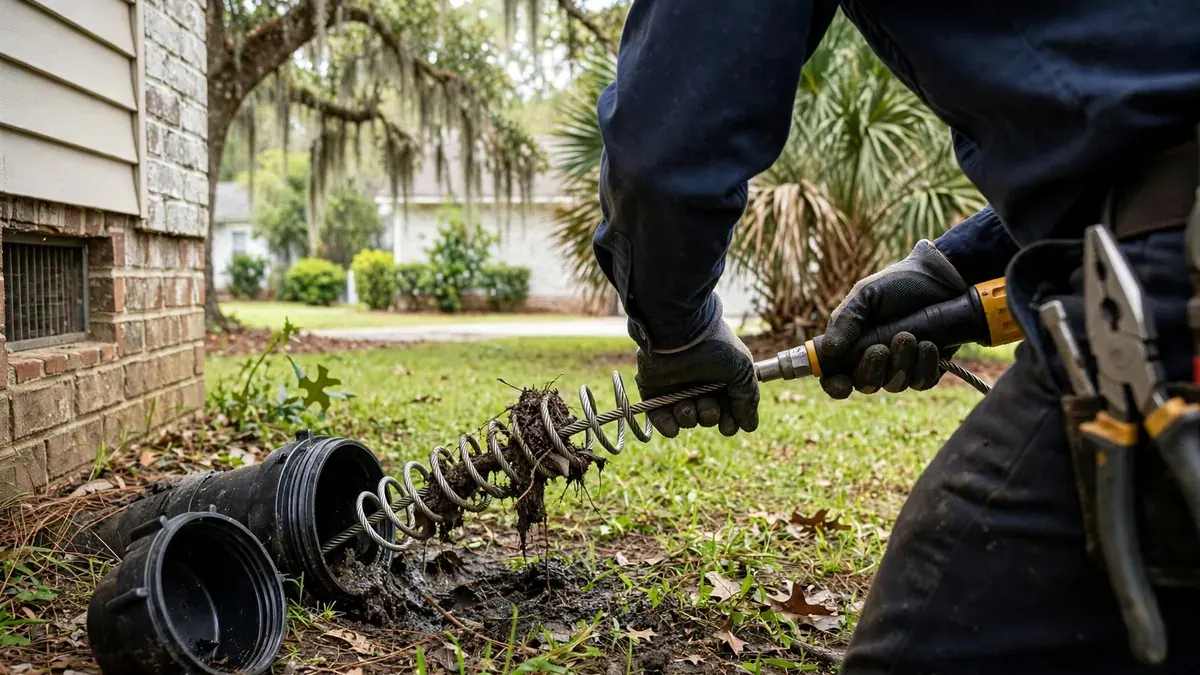
| Hair clog | Does little | May not clear | Snake or auger |
| Full backup | No | No, and dangerous | Yes |
| Tree roots | No | No | Cutting and jetting |
Why caustic cleaners are a risk
Strong chemical drain openers generate heat and can damage older pipes and fixtures. If the clog does not clear, standing chemical water is a hazard to anyone who then works on the drain. Tell your plumber if you have used one.
Never mix cleaning products. That is a safety rule for any household, and it applies to drains.
Using a bio cleaner properly
Apply it at night when the drain will not be used for several hours. Follow the label for dose and frequency. Run warm water first so the pipe is not cold, but avoid scalding hot water, which can kill cultures.
Use it regularly, not as a one-time rescue. If a drain is still slow after a few treatments, the cause is likely beyond what an enzyme can handle, and a drain cleaning visit will find it.
Kitchens, grease and commercial drains
Restaurants and food prep kitchens in Chelsea use enzyme products to help control grease, but they do not replace regular grease trap service. A backed-up kitchen line needs mechanical cleaning or hydro jetting.
For shops and multi-unit buildings, regular treatment of floor drains helps with odors, while service by a plumber deals with structural problems.
Chelsea local note
About 70 percent of Chelsea's sewer system is combined, so grease and solids that leave your building meet stormwater in the same pipes. The Water and Sewer Department asks residents and businesses not to pour fats, oils and grease down drains.
Biological products do not change that. Keep grease out of the sink in the first place. Source types: city sewer information and state plumbing guidance.
Reading the label and choosing a product
Look for a product that names the type of culture or enzyme and the kind of waste it targets. Some are made for grease, some for hair and paper and some for septic systems. A general product may do less for a specific problem.
Check the shelf life. Cultures lose strength with age, and an old bottle may do nothing at all.
Using bio products in rentals and multi-unit buildings
A landlord can supply a bottle with each unit and ask tenants to use it monthly. It costs little and sets a habit. It does not replace a yearly cleaning of the main stack in a building with shared kitchens.
Keep a log of which drains were treated and when. If a recurring clog appears, the log tells a plumber what has already been tried.
Signs that it is time for a plumber
Call a plumber if water backs up in more than one fixture, if a drain is completely blocked, if you smell sewage or if the same drain slows again within weeks. Those are signs of a blockage or a damaged pipe that no additive will clear.
We use a camera to see what is happening and match the cleaning method to the problem. See sewer inspection for how that works.
A simple monthly routine that works
Once a month, pour the recommended dose into the kitchen and bathroom drains at night, let it sit and flush with cold water in the morning. Add a mesh strainer to the shower and kitchen sinks, and wipe grease from pans before washing.
Keep the routine written on a card inside a cabinet door so every household member follows it. In a rental, send a short note at move-in. Small habits cost nothing and prevent most of the clogs we are called to fix.
Drain still slow?
Call and a plumber can find the cause with a camera.
Bio cleaner questions
They are generally gentler on pipes than caustic products, but follow the label.
No. A toilet clog needs a plunger, an auger or a plumber.
Maintenance products can take days of regular use to show a change.
Yes, often as a maintenance step. Read the label for the specific product.
Treat the symptom with maintenance, and call for a camera inspection if it keeps returning.
Related pages
Nearby service areas: Everett, Revere. Related services: Drain Cleaning, Hydro Jetting.
Standards and sources
Drain, trap and vent requirements fall under the Uniform State Plumbing Code (248 CMR 10.00). For what belongs in a sewer, the Chelsea Water and Sewer Department publishes guidance on fats, oils, grease and wipes. The code is published by the Commonwealth at 248 CMR 10.00, the Uniform State Plumbing Code.
Written by the Chelsea Express Plumbing team. Last updated 2026-11-16.