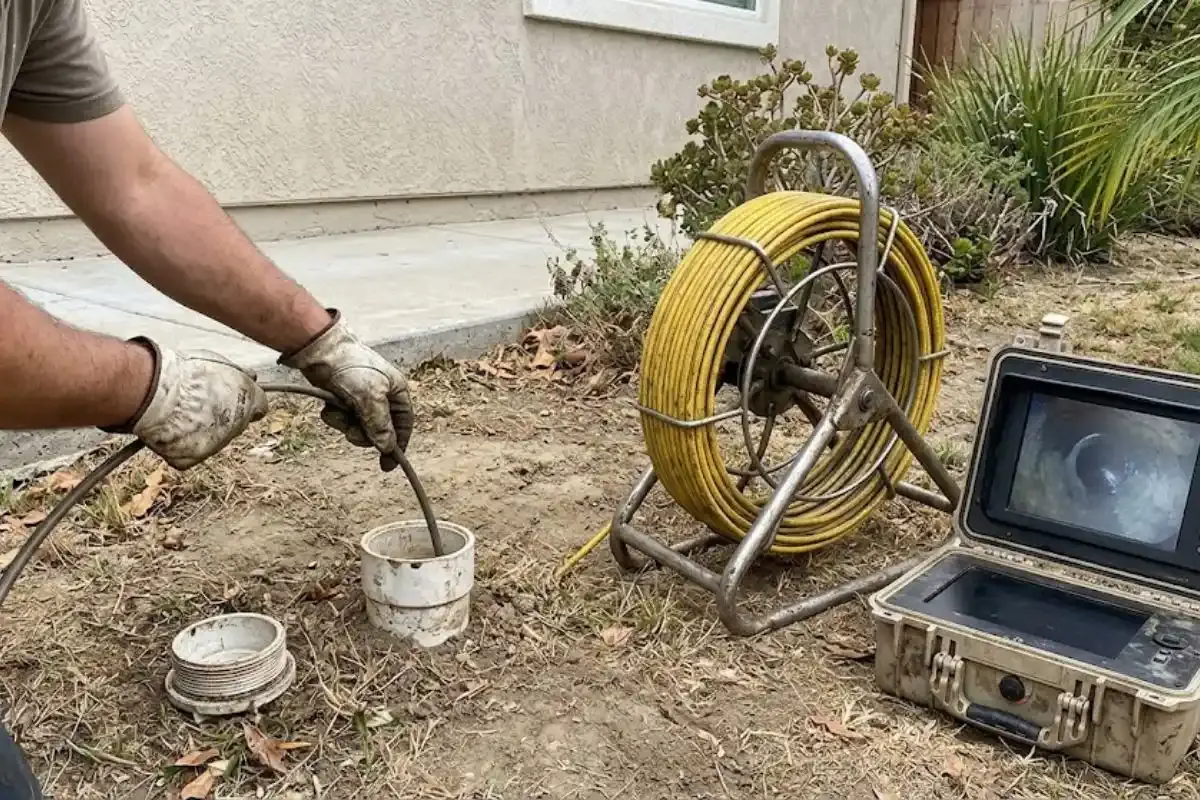
Sewer inspection in Chelsea, MA uses a waterproof camera on a flexible cable to travel through your drain and sewer line and record what it finds. Cracks, offset joints, roots, bellies, scale and breaks all show up on screen.
The inspection answers the question behind most sewer calls: is the line damaged or just dirty? That determines whether you need cleaning, a spot repair or a larger project.
When an inspection makes sense
Recurring backups, slow drains in several fixtures, gurgling toilets and sewage smells point to a main line problem. An inspection is also smart before buying an older building, after a clog that returns and before any major sewer repair.
Chelsea's older buildings often have clay, cast iron or Orangeburg pipe, and those materials fail in different ways. Seeing the actual pipe lets us recommend the right fix.
What the camera can show
| Finding | What it means | Likely next step |
|---|---|---|
| Roots | Roots entering at joints | Cutting or jetting, then lining or repair |
| Offset or separated joint | Pipe sections shifted | Spot repair or lining |
| Cracks or collapse | Structural failure | Sewer line repair |
| Belly or sag | Low spot holding water | Excavate or reroute |
| Grease or scale | Buildup narrowing the pipe | Hydro jetting |
Why Chelsea's sewer system matters to your line
Roughly 70% of Chelsea's sewer system is combined, meaning stormwater and sewage share pipes. In heavy rain those pipes can surcharge, and a weak or low private lateral is more likely to back up into basements.
The camera shows whether your private line is part of the problem or whether the surge is coming from the street. The city's ongoing separation work reduces flows over time, but it does not repair a cracked lateral.
How an inspection works
- Find accessWe use a cleanout, vent or removed toilet to enter the line.
- Run the cameraThe camera travels the line while recording video and tracking distance.
- Locate defectsA locator marks the depth and position of problem spots on the surface.
- Explain and recommendWe review the footage with you and give you a clear next step.
Reading the findings with us
After the camera pass, we sit with you and replay the key moments. We point out the type of pipe, the joints, the defects and the distance from the cleanout. Ask questions, because the footage is yours to keep.
A defect is not always a problem. A small offset or a light scale may be fine for years, and we say so. If something needs action soon, we tell you why and what the options are.
Planning ahead for repairs or a sale
If the footage shows trouble, a written scope for lining or replacement lets you compare costs, schedule the work and talk to your insurer or the buyer. If it shows a healthy pipe, keep the recording for your records.
Many buyers ask for a sewer scope in their inspection period. Having a recent recording speeds a sale and reduces negotiation about the line.
Need to see inside your sewer line?
Call and a plumber will schedule a camera inspection or respond now if you have a backup.
Real estate inspections
Buyers of older Chelsea two- and three-family homes often add a sewer scope to their inspection. A line that looks fine at the toilet can be cracked under the basement slab or at the street connection.
Sellers also use an inspection to disclose line condition and negotiate repairs before listing. We provide a written summary of what the camera found.
What an inspection depends on
What moves the price
Insurance usually does not cover inspections. You get a clear price before work starts. Call (617) 752-0573.
Sewer inspection questions
Yes, after the line is cleared enough to pass the camera. Dispatch is open 24/7 and the plumber will tell you what is realistic.
Yes. We provide the footage and a short written summary of defects and their location.
Usually one to two hours depending on line length and condition.
It shows the condition, and from that we advise on cleaning, lining or replacement. We explain the evidence before you decide.
Yes. Lining only works on pipe that is structurally able to carry a liner, and the camera confirms that.
Standards and sources
Camera inspection findings feed repair work that falls under the Uniform State Plumbing Code (248 CMR 10.00). The code is published by the Commonwealth at 248 CMR 10.00, the Uniform State Plumbing Code.
Written by the Chelsea Express Plumbing team. Last updated 2026-11-16.