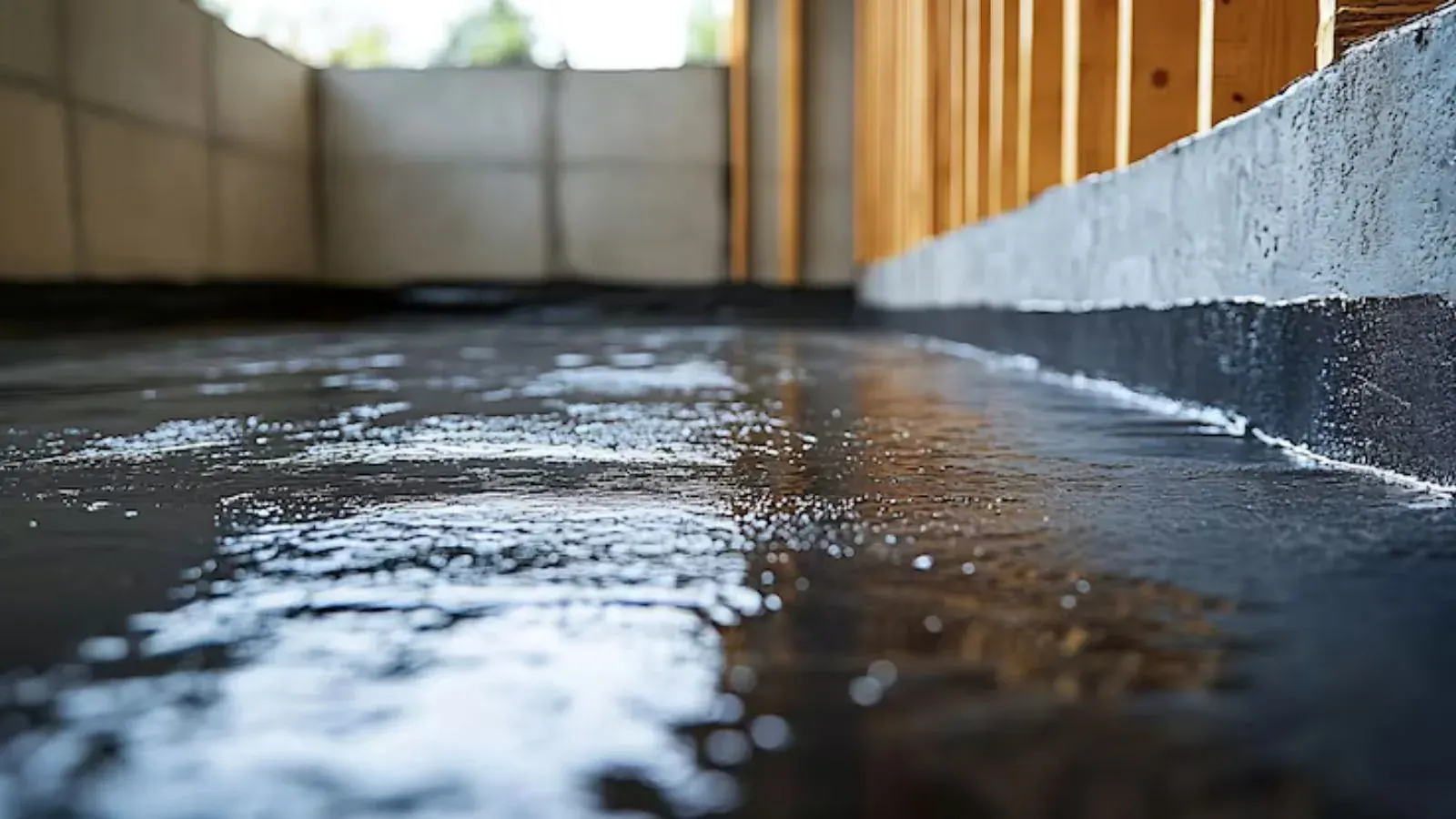
A waterproof membrane is a sheet or coating applied to a wall or floor to keep moisture out or to guide water to a drain. It is one tool among several, and it works best as part of a system with drainage and a pump.
This guide explains the main types, what each can and cannot do and how to decide whether a membrane is right for a Chelsea basement.
Types of membranes
Exterior membranes are applied to the outside of a foundation during excavation and block water before it reaches the wall. Interior membranes, often dimpled plastic sheets, sit against the wall and direct seepage to a floor drain.
Liquid coatings and sealers fill pores and hairline cracks in masonry. They help with dampness but do not stop pressure from groundwater.
Membrane options compared
| Option | Best for | Limit |
|---|---|---|
| Exterior membrane | New foundations or full excavation | Digging and access |
| Interior dimple board | Seepage through walls | Needs a drain and sump |
| Liquid sealer | Minor dampness | Does not stop pressure |
| Floor membrane with drain | Water at the wall base | Part of a larger system |
Why a membrane alone often fails
Water has to go somewhere. A membrane that is not connected to a drain traps water behind it, and pressure can push through weak spots. That is why most interior systems pair the membrane with a perimeter drain and a sump pump.
Before any system goes in, find out whether the water comes from the ground or from a plumbing leak. Our leak detection team can rule out plumbing.
What to consider in an older brick or stone foundation
Older Chelsea foundations are often brick, stone or rubble masonry with lime mortar. These walls let moisture through by design, and sealing them completely can trap moisture and damage the masonry.
A drainage-first approach is usually safer for old walls. We explain what we see and what we recommend on a visit. Read more on basement waterproofing.
Finishing the basement afterward
A dry basement still needs ventilation and a dehumidifier in humid months. Avoid putting carpet or untreated wood directly against the floor, and leave a gap behind finished walls.
Keep your sump pump tested and powered. See sump pump repair for backup options.
Chelsea local note
Chelsea sits low beside the Mystic River and Chelsea Creek, and basements in the lower parts of the city can see a high water table after storms. Sewer separation work by the city is ongoing, but private foundation drainage is the owner's responsibility.
Massachusetts requires a permit when plumbing is altered, including pump discharge work. Source types: city information and state plumbing licensing guidance.
Cost drivers without the guesswork
The price of a membrane system depends on the length of wall, the condition of the surface, the access to the exterior and whether a drain and pump are part of the job. A simple coating on a small wall is a modest job, and a full perimeter system is a large one.
We give you a written scope with each component listed so you can compare bids on equal terms.
Inspecting the work after installation
Run water along the base of the wall and watch where it goes. It should flow to the drain and into the pit. Check the seams, the transition to the floor and the corners, where sealing most often fails.
Keep a record of the installation date and the products used. It helps if you sell the house or make a warranty claim.
Humidity, radon and air quality
Water is only one part of a damp basement. Humidity affects stored items, and soil gas such as radon can enter through cracks. A membrane that blocks moisture may also reduce soil gas, but it is not a radon system.
If air quality is a concern, test for radon and ask a qualified professional. It is separate from plumbing, and we will tell you when something falls outside our work.
Questions to bring to a waterproofing estimate
Ask what is causing the water, how the contractor knows and what happens to the water once it is collected. Ask where the pump discharges, what the warranty covers and whether it transfers when you sell. A vague answer to any of these is a reason to keep shopping.
Ask also whether the work needs a permit and who pulls it. Pump discharge and drain connections touch plumbing, and in Massachusetts plumbing work is permitted and inspected. A contractor who skips the permit leaves you holding the risk.
Doing the math on repair versus a full system
A hairline crack with a single damp patch rarely justifies a perimeter system. Persistent water after every storm, a pit that never empties or visible efflorescence along the whole wall points the other way. Weigh how you use the space, how long you plan to stay and what the damage costs you each year.
A small repair that buys time is a fair choice if you say so plainly. We will tell you which category your basement falls in, and what the larger system would add.
Wet basement?
Call and we will find where the water is coming from before you spend money on a system.
Basement membrane questions
It reduces moisture, which helps, but you also need ventilation and a way to remove water.
Many people do, but the drain and sump connection should be done correctly or the system will not work.
It can help a little, but insulation is separate.
It depends on the product and conditions. Ask your installer for the manufacturer's statement.
Yes. Dispatch is open 24/7, and we schedule an inspection.
Related pages
Nearby service areas: Everett, East Boston. Related services: Basement Waterproofing, Sump Pump Repair.
Standards and sources
Drains, sump pumps and discharge piping fall under the Uniform State Plumbing Code (248 CMR 10.00). Structural and masonry work is a separate trade. The code is published by the Commonwealth at 248 CMR 10.00, the Uniform State Plumbing Code.
Written by the Chelsea Express Plumbing team. Last updated 2026-11-16.