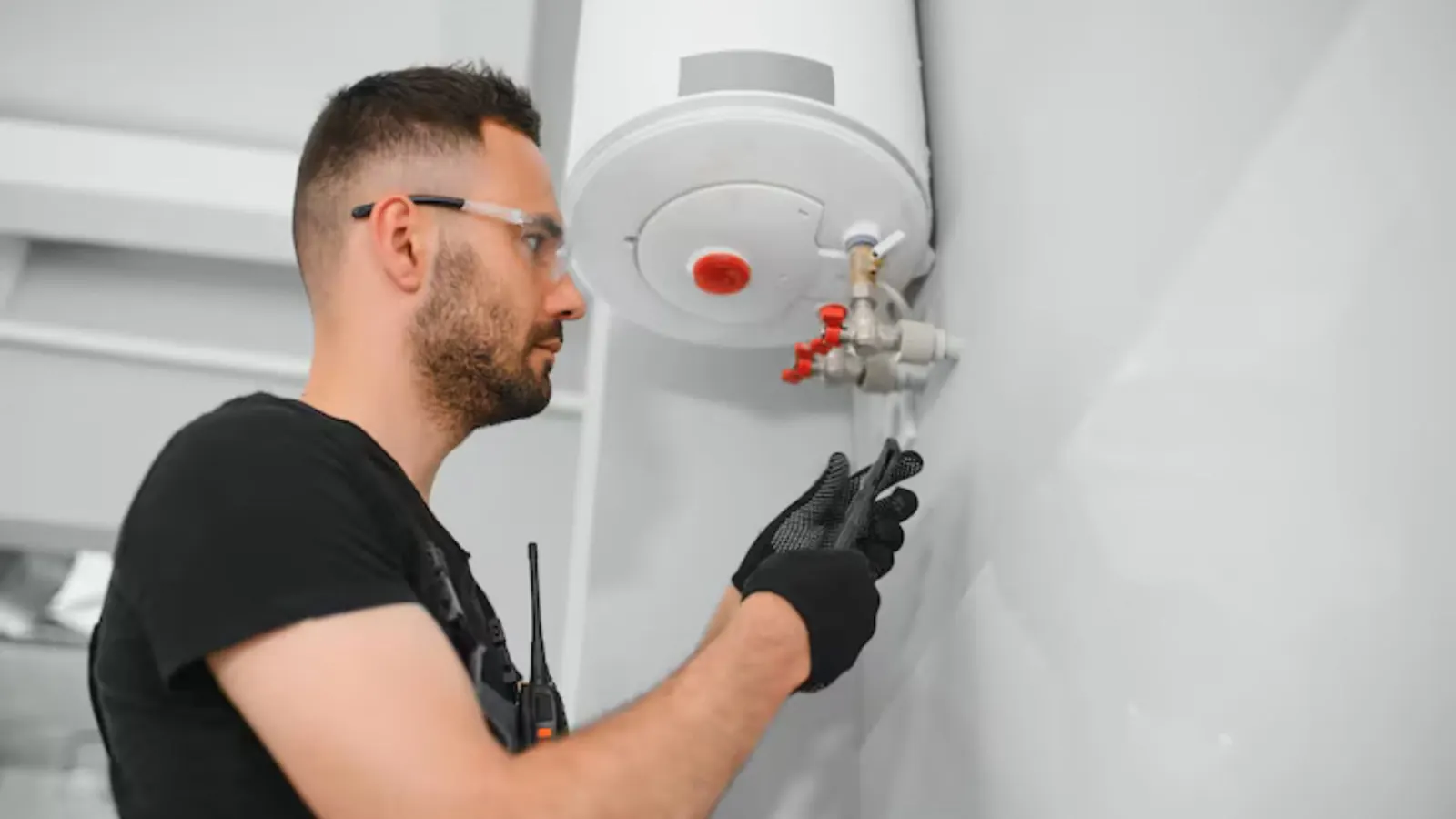
Water on the floor near a water heater does not always mean the tank has failed. A loose fitting, a weeping relief valve or condensation can look like a leak. A leaking tank body, however, cannot be repaired, and it can release a lot of water quickly.
This guide helps you work out where the water is coming from, what to do right now and how a plumber decides between repair and replacement.
Do this first
Turn off the power at the breaker or the gas control. Close the cold water supply valve on the pipe above the heater. If water is moving toward electrical equipment, stay out of the area and call us on the 24/7 line.
Place a bucket under any steady drip and mop the floor to prevent slipping and mold. Take photos of the leak and the tank label for your insurer.
Where the water comes from
| Where | Likely cause | Fixable? |
|---|---|---|
| Top connections | Loose or corroded fittings | Yes |
| Relief valve or pipe | High pressure or temperature, or a worn valve | Yes |
| Drain valve | Worn washer or a loose cap | Yes |
| Base of the tank | Failed tank | No, replace |
| Condensation on cold days | Humid air meeting a cold tank | Yes, ventilation or insulation |
When a leak means replacement
Steel tanks corrode from the inside, and once a seam fails, the tank is done. A heater that is leaking at the base and is more than ten years old is almost always a replacement, even when an anode rod or a valve has been replaced before.
Newer heaters with a leaking fitting are different. We often repair those the same visit. See water heater repair for what that covers, or water heater replacement if the tank is gone.
The relief valve is not a nuisance
A water heater relief valve opens when pressure or temperature goes too high. A valve that drips now and then may point to thermal expansion in a closed system or a pressure problem in the building supply.
Do not cap or plug the valve. It is a safety device, and blocking it can cause a dangerous failure. Our plumbers test the pressure and recommend an expansion tank where needed.
Basements, floor drains and shared utility rooms
Many Chelsea heaters sit in basement corners with no drain nearby. A small leak can run behind stored boxes for days. A drip pan with a drain line is cheap protection, and we can add one.
In multi-unit buildings, a leaking shared heater affects every tenant. Tell the owner immediately and keep the area clear so water does not reach other utilities.
Chelsea local note
MWRA delivers soft water to Chelsea, at about one grain per gallon and with a pH of 9.0 to 9.5. That water causes less scale buildup in tanks than in hard water regions, so a leaking tank here is more often age and corrosion than mineral damage.
Massachusetts requires a permit to replace a water heater, and a licensed plumber must pull it. Source types: MWRA water quality information and state plumbing licensing guidance.
What the mess costs you if you wait
A slow leak from a fitting can run for weeks and soak wood framing, a sill plate or insulation. Mold needs moisture and a few days, and a utility room corner is a perfect place for it. The earlier you stop the water, the smaller the repair that follows.
Photograph any staining or warped flooring. If an adjuster needs to see what the leak did, those pictures show the timeline better than a description.
Insulated pans and leak alarms
A drain pan under the heater catches a drip and sends it to a drain line, so a minor failure does not turn into a flood. A battery-powered water alarm on the floor costs little and wakes you when water appears.
We often recommend both when we replace a heater in a finished basement or above a living space. They are cheap compared with a ceiling repair.
A quick guide to what you can safely do yourself
Tightening a loose fitting by hand, closing the drain valve cap and drying the area are safe steps. Replacing a relief valve, working on gas lines or opening electrical covers is not. If you are unsure, shut off the supply and call.
Never plug the relief pipe, and never run a heater with a leaking tank. A small leak can become a large one without warning, and a tank under pressure holds a lot of hot water.
Water around your heater?
Call the 24/7 line. A plumber can tell you whether it is a fix or a replacement.
Leaking water heater questions
It can be, since a failing tank can release many gallons and damage floors and walls. Shut off the supply and power and call us.
No. Sealants and patches do not hold on a corroded steel tank. Replacement is the safe answer.
Condensation shows as damp rings and beads on the outside of the tank, mostly in humid weather. A real leak keeps coming after the surface is dry.
Insurance often covers sudden damage from a burst tank but not the heater itself. Call your carrier and keep the photos.
Our 24/7 line serves both. Tell dispatch your address and what you see.
Related pages
Nearby service areas: Everett, Revere. Related services: Water Heater Repair, Water Heater Replacement.
Standards and sources
Relief valves, discharge pipes and venting are covered by the Uniform State Plumbing Code (248 CMR 10.00) and by the manufacturer's installation instructions. Gas appliance work is regulated by the state Board of State Examiners of Plumbers and Gas Fitters. The code is published by the Commonwealth at 248 CMR 10.00, the Uniform State Plumbing Code.
Written by the Chelsea Express Plumbing team. Last updated 2026-11-16.